Archives
High School Students from Mexico Visit Us
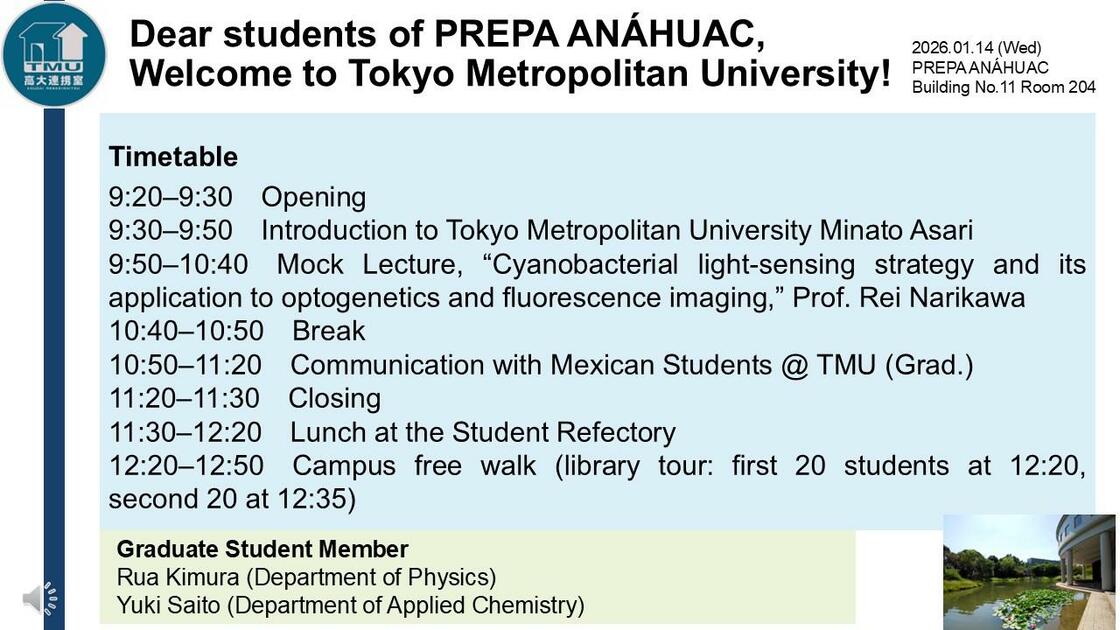
On Wednesday, January 14, over 120 high school students from Mexico visited our university.
The program included a university introduction by Dr. Asari Minato, a mock lecture by Dr. Rei Narikawa, Associate Professor, and a session with a Mexican graduate student. Below is an overview of the lecture and comments from Dr. Narikawa.
On Wednesday, January 14, 2026, as part of a program organized by a British educational organization, approximately 120 high school students from Mexico visited Tokyo Metropolitan University. I (Rei Narikawa from the Department of Biological Sciences) delivered a guest lecture titled "Cyanobacterial light-sensing strategy and its application to optogenetics and fluorescent imaging."
The lecture began with an overview of the fundamental principles of light and color. I then explained that photosynthetic organisms do not merely use light as an energy source, but also utilize it as "information" to optimize photosynthesis within ever-changing environments. This was followed by an introduction to the light-response strategies mediated by "cyanobacteriochromes"—the light-sensing proteins in cyanobacteria that have been the focus of my research.
Furthermore, the lecture showcased how these sensors can be engineered for practical applications, such as "optogenetics," a technology used to control biological processes with light, and "bio-imaging," used to visualize molecular dynamics within cells. Although the topics were highly specialized, the presentation was designed to be intuitive and visually engaging, featuring an abundance of photos and videos centered around the theme of light and color.
One particular highlight was a video of a prior study showing a mouse’s behavior being controlled by light after the photoreceptor "channelrhodopsin" was introduced into its brain. The students were visibly amazed, and after the lecture, many gathered around the podium to ask insightful questions and share their comments. I was struck by their eagerness to engage with such complex material.
One memorable interaction involved a student asking, "How long have you been conducting this research?" When I replied, "Since around 2006," the student’s eyes widened in surprise as they exclaimed, "That’s before I was even born!" It is our hope that by realizing the findings presented in a one-hour lecture are the result of 20 years of steady, persistent effort, the students were able to catch a glimpse of the true depth and fascination of scientific research.
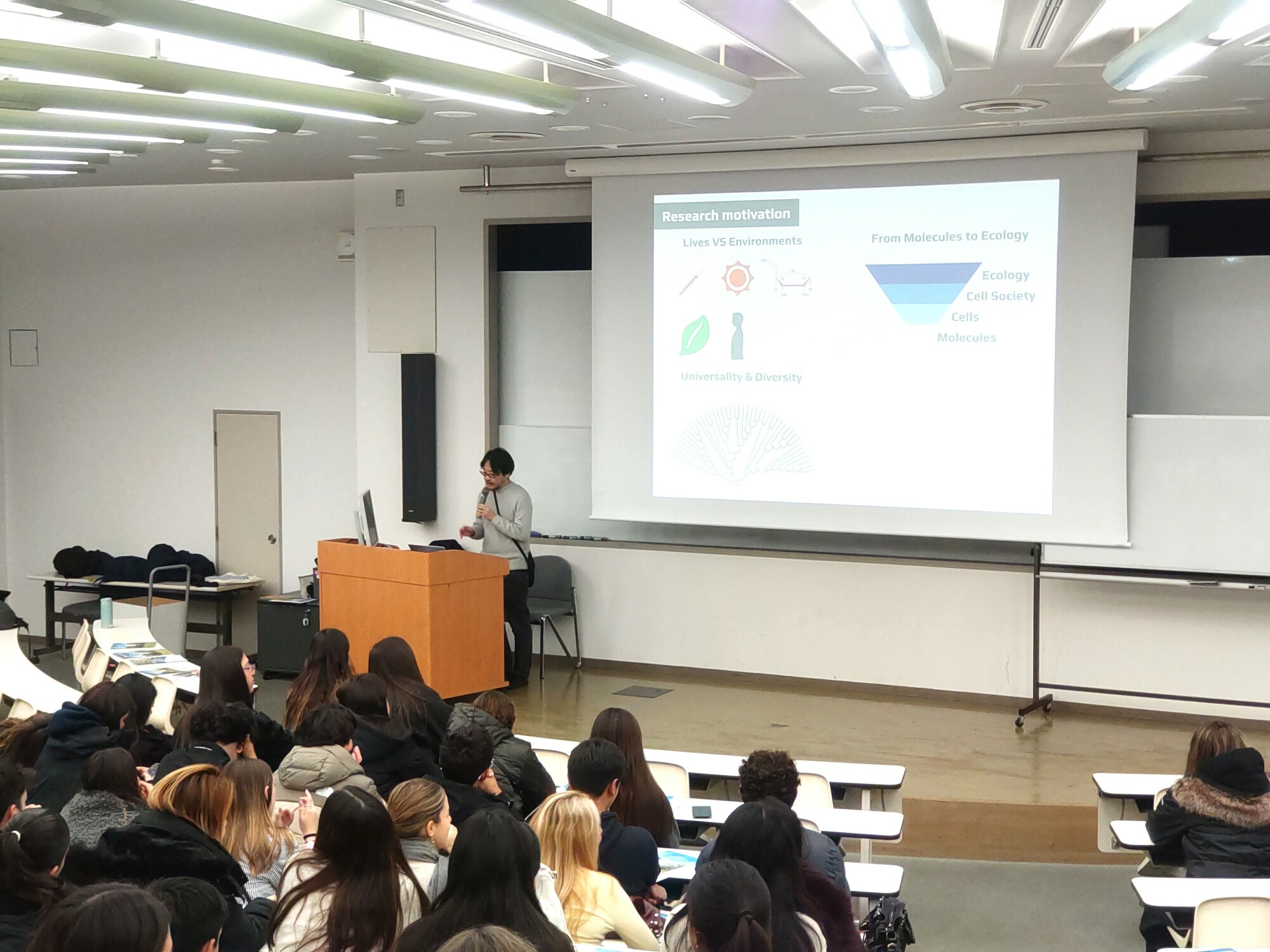
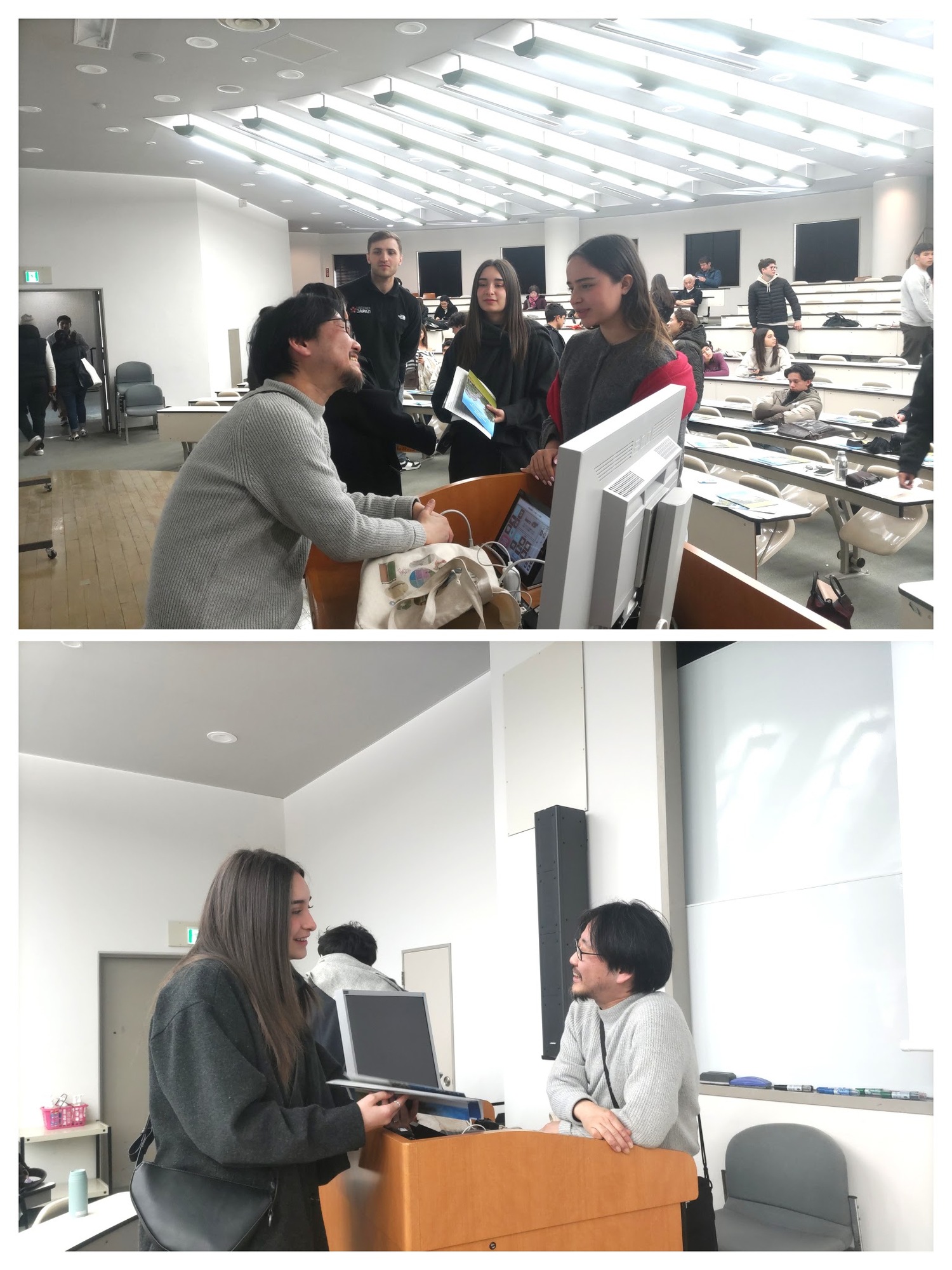 Dr. Narikawa's mock lecture
 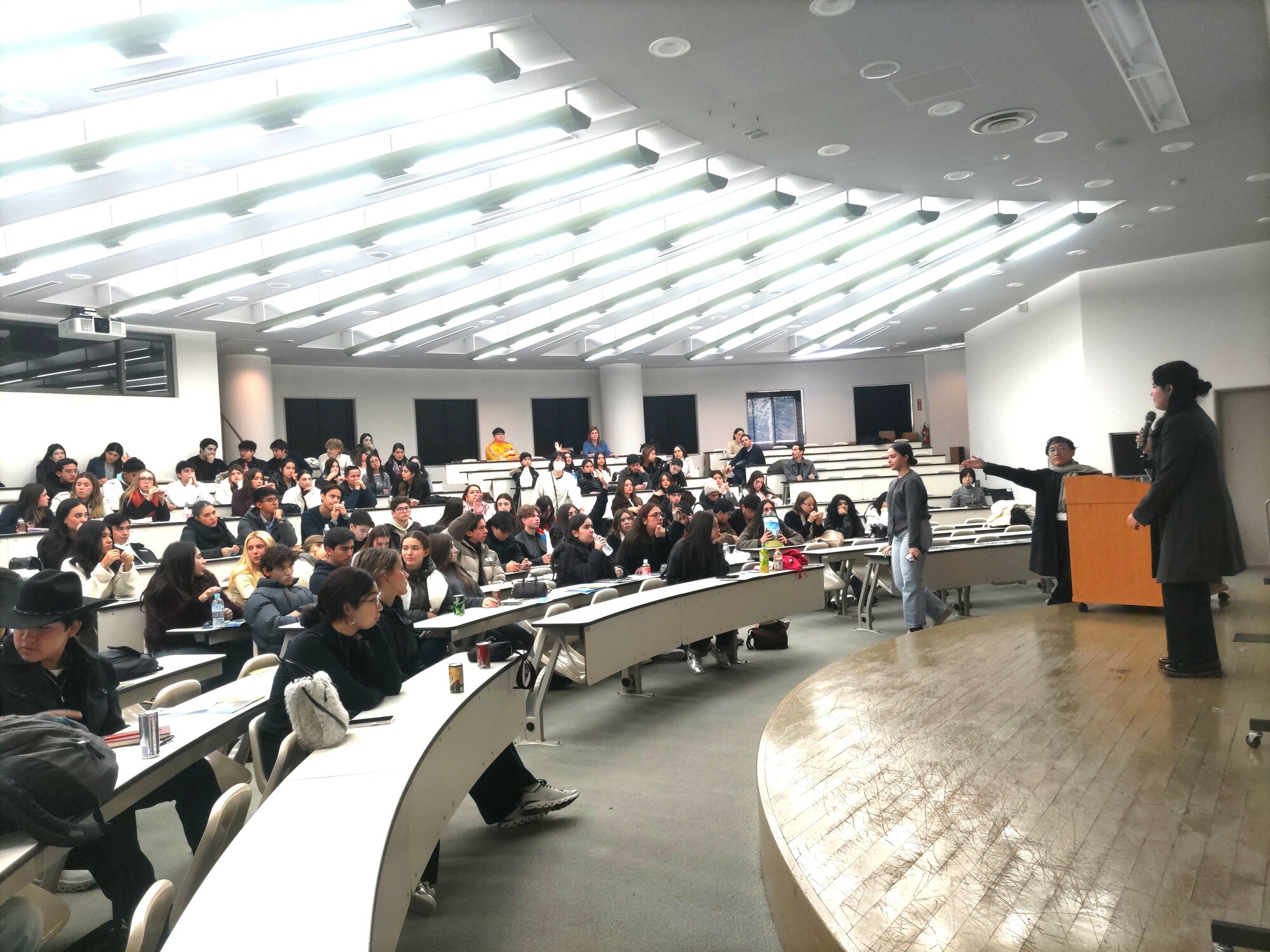 session with a graduate student


