Archives
Examine the tissue structure of plants
The Department of Biological Sciences, Faculty of Science, Tokyo Metropolitan University, is home to numerous research laboratories that aim to elucidate biological phenomena using a diverse range of methods, from microbiology to macrobiology. The "Biology Laboratory Course" is organised by academic staff from these laboratories and is designed for first- and second-year undergraduates. Through basic experiments in various fields, students learn experimental methods and ways of thinking in the biological sciences. Of course, this laboratory course is also offered in both Japanese and English sections.
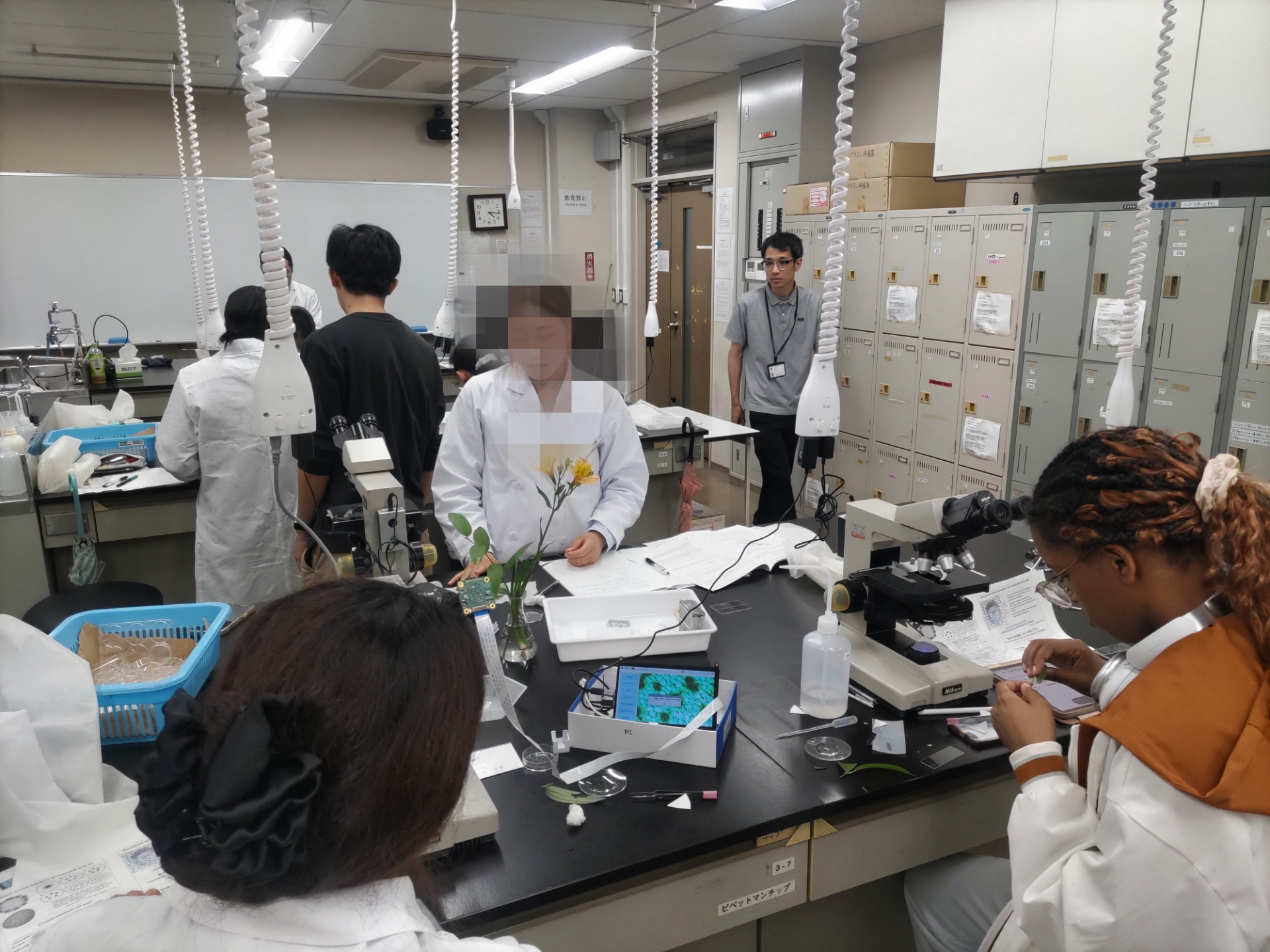
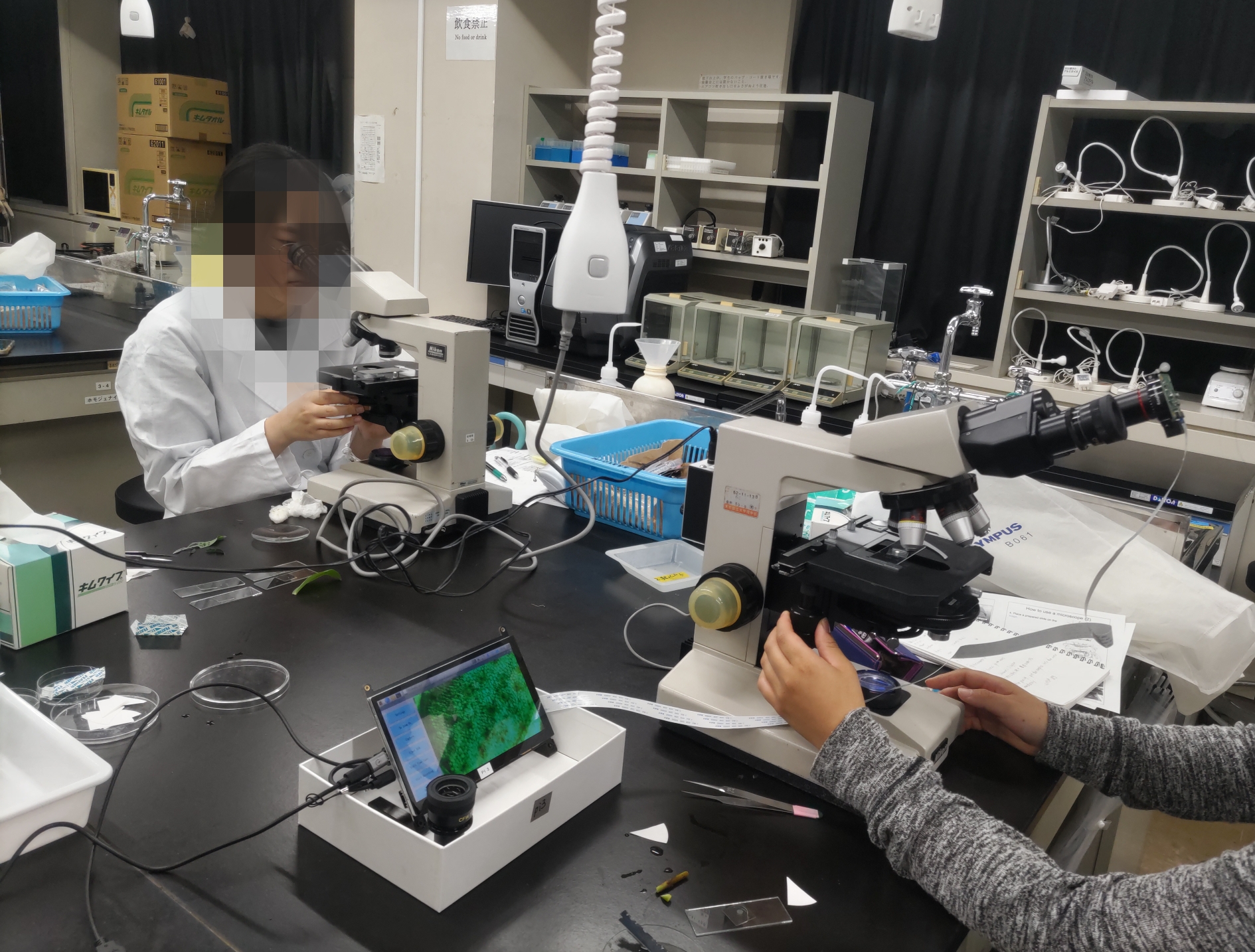
This week’s lecture aimed to examine the tissue structure of plants from developmental and evolutionary perspectives by comparing different species. Using three plant species with distinct characteristics, students prepared sections of the stem, leaf cross-sections, and leaf surfaces. Whilst observing these as microscope slides, they considered the structure of the tissues and reflected on why differences arise between species. In addition, the students practised using light microscopes—an essential tool in biological research—and became familiar with the equipment required to photograph microscope images.
The students struggled at first to prepare slides with razor blades, but in the end, I believe every team produced excellent slides, masterfully handled the microscopes, and conducted thorough observations. Each time, I am struck by how one of the great appeals of the English class is that both native English-speaking students and Japanese students—who are full of the spirit to take on the challenge of studying biology in English—can work together on a variety of biology tasks and share in the enjoyment of the subject. An international postgraduate student also joined us as a teaching assistant and was a great help to many of the students.
I believe that the "Biology Laboratory Course", which spans approximately two years and allows students to learn through hands-on experiments across diverse fields of biology, is one of the courses that best symbolise the Department of Biological Sciences, where research laboratories from many different fields are concentrated. I particularly appreciate the atmosphere in which the teaching staff go to great lengths to prepare each session with innovative ideas to enhance the students’ learning, and the students, in turn, tackle these challenges with their utmost dedication. In the English class in particular, there are many moments when students share a high level of motivation for learning, transcending language barriers, which I find deeply rewarding as a lecturer.
As the students progress to their third and fourth years and then on to postgraduate study, they will tackle more advanced material and work on their own research topics. I hope they will learn as much as possible from this laboratory class, so that it serves as a solid foundation for their future studies.
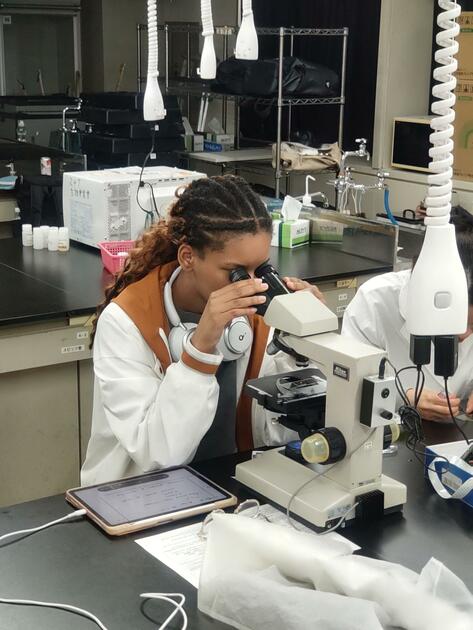
Below are comments from an international undergraduate student enrolled in this experiment class.
-Was any part of the activity challenging for you? If so, which part and why?
A.The most challenging part of the lab for me was making the leaf cross sections thin enough to have a clear image under the microscope. It was difficult to keep my hands steady to make a straight cut while keeping its original shape and making it very thin.
-What did you observe?
We observed the stem and leaf cross sections as well as both sides of the leaves for the species: Alstroemeria specitibilius, Acorus gramineus, and Disporum sessile
-Overall impressions
Overall, I think the class has good hands-on experience and allows for students to get comfortable with equipment and techniques that will probably be common practice further into our careers.